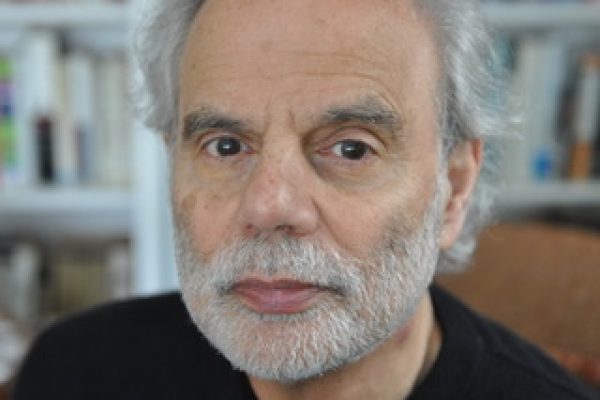
They say with age comes wisdom. (Added author Oscar Wilde archly, “But sometimes age comes alone.”) Wise or not, I turned 80 on Dec. 31. Eighty may be the new 60, but regardless, it is undeniably old. And old age is when one confronts at first hand the inevitability of death.
Tolstoy said getting old was the most unexpected thing that can happen to a person, and I agree. Of course, everyone hopes to live to a healthy old age. But few people have any idea what that entails until they get there: the things you have to give up, the decline in energy, the loss of beloved friends and family, the increasing frailty, the unavoidable fade out.
I’ve asked my age cohorts how they can face their inevitable decline and final days with some degree of acceptance and even serenity. My good friend and fellow RoundTable columnist Peggy Tarr says to “appreciate every day as one to enjoy and do not let physical changes stop you from enjoying the loves in your life.”
My longtime buddy Neil responds, “It’s OK. I’ve lived a good life, I hope I don’t suffer too much; I hope I go quickly (which is what my mother used to say about herself). At other times another part of me says, ‘Wait a minute! Wait a minute! What is this thing, Death?’”
Good question. Facing the great mystery, I wonder if I’ve done enough in my nearly 30,000 days — a blink in eternity — to justify taking space on the planet. I wonder if I’ve given thanks for all the wonderful things I’ve been blessed with, like good health and a nice home. Thankful for grandparents who had the foresight and fortitude to uproot their families and come to America, thus saving us from the Holocaust. Blessings like flush toilets, clean water, modern medicine, a long and happy marriage, a loving family, a deep connection to our beloved Evanston and the RoundTable.
I’ve been writing this more-or-less biweekly column since November 2017, and by my count have now written more than 200. I’m deeply grateful to the RoundTable’s co-founder Mary Gavin for giving me the opportunity: it’s been a wonderful outlet. Simply put, writing helps me think more clearly — no small thing.
As I said in a 2021 column, “It’s been great fun, being able to write about almost anything, and so I have: columns on writing, music, politics, cosmology, weather, nature, confidence, growth, living and dying. People ask me if my column has a name. No. They ask me if it has a theme. No. Just whatever is on my mind that week.”
The columns have brought me some on-the-street recognition as well as awards seven years in a row from the Northern Illinois News Association.
But now, entering my ninth decade, I plan to cut back, to spend more time working on a memoir (requested by my grandson), perhaps a collection of my best columns for publication and a new novel about a young music student and her beloved teacher. Other than writing, playing music has been my life’s passion, and I want to share what that involves and how important it is.
As for wisdom, I haven’t much to offer that couldn’t be found in a Hallmark card or Mary Oliver poem: Stay close with friends and family; tell people whom you love that you do; keep busy and exercise daily (walk, bike, work out) and help those in need. Don’t take things too seriously; most aren’t.
In an obituary about the writer Sue Bender, The New York Times synopsized the lessons she learned from the Amish: “… recognize the beauty of the everyday, the peace that comes from slowing down and the dignity of ordinary work.” Good stuff.
Also good to have a sense of perspective. Chicagoan Howard Englander, 93, author of Cheating Death and Embracing Elderhood about dealing with the travails of aging, suggests oldsters obsessing about their age-related problems should, “… take a look at the tent city under the Foster Street viaduct and be grateful they’re not dealing with survival; grateful that they have clean clothes and are sitting down to a warm dinner with convivial companions rather than surfing a dumpster. I try to accept loss rather than endlessly bemoan it. I’m not the man I used to be but I’m adding years of joy and meaning to my life by embracing the man I am now.”
But sometimes age-related disease doesn’t respond to hopefulness and gratitude. Of his more recent bout with a cancerous tumor wrapped around his spine and melanoma lesions in his brain, which are in retreat thanks to radiation and chemotherapy, Englander says in his most recent Substack column, “I try to meditate often to help calm the mind and distract my constant awareness of the cancer that has taken up residency.”
In a followup email, he added, “Hopefully the cancer will continue to shrink and I’ll be able to live with physicality close to normal, submitting columns from Spain and Mexico and warm environs!”
A college buddy, while worrying about loss of memory and good health, consoles himself with this: “We live in interesting times. Some of it is exceptionally good. You can access nearly all the information mankind has accumulated. I always thought my parents lived in a uniquely evolving world, but ours has been exponentially stunning: technical knowledge, health, freedom of movement, literacy, food availability, housing.”
Good to remember.
Northwestern University’s Mesulam Institute for Cognitive Neurology & Alzheimer’s Disease studies what they call “SuperAgers,” those 80 and over who have maintained mental acuity as good or better than people decades younger. Molly Mather, assistant professor of psychiatry and behavioral sciences, tells me that what characterizes such people is staying active and “doing something meaningful in their lives. They have lots of engagement and positive connections to other people.” They try to keep learning and growing, she said, and have a willingness to challenge themselves.
Then there’s this blunt assessment from much-decorated British actress Helen Mirren about recently turning 80: “F— it, I’m alive.”
The great psychoanalyst Erik Erikson, in his eight stages of psychosocial development, said the central issue of old age is to “assess and make sense of life and [the] meaning of [one’s] contributions.”
Making sense of life is beyond me. But the meaning of one’s contributions relates to the gifts of giving and loving. As the Beatles put it (better than I can): “The love you take is equal to the love you make.”
To deal with the regrets of past mistakes and dread of future decline, I try to focus on the simplest thing: what’s directly in front of me. Treat the job at hand, no matter how mundane — washing dishes, shoveling snow, boiling an egg — with the same intensity as a child taking its first steps.
Former RoundTable columnist (and good friend) Charlie Wilkinson, makes the same point: “At 90, I feel my decision to live in the moment and live forward has gotten me here.”
Or as author Anne Lamott wrote, live “with a level of concentration and care in which you can lose yourself, and so in which you can find yourself.”
Yes, even after eight decades we are still finding ourselves, we are never complete and never finished fashioning our lives, and so we can always fashion them better, we can work to make of ourselves a better person, even to the last day, which is the best way to live — at any age.