Evanston RoundTable, July 30, 2026
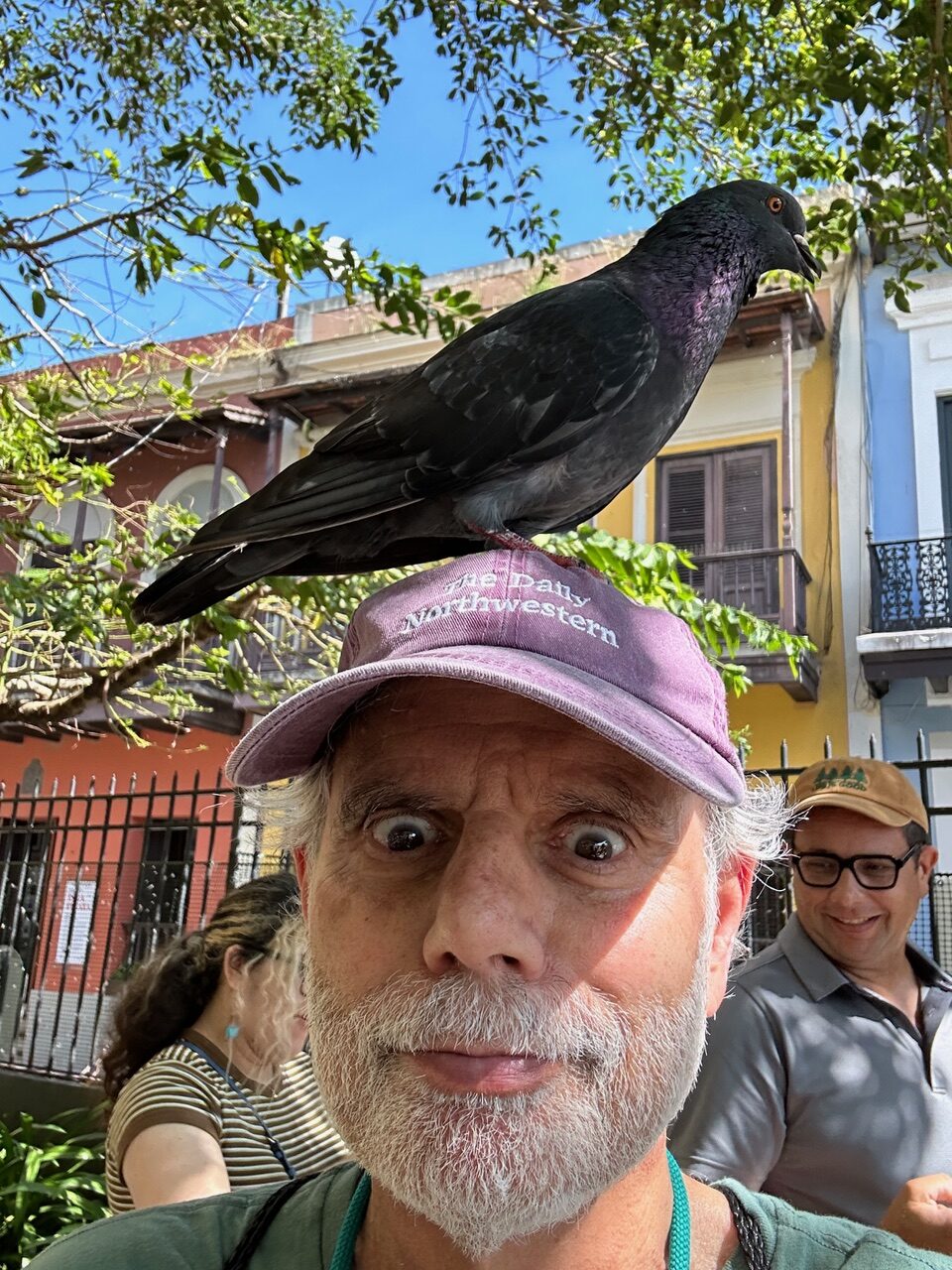
My father, a frequent and harsh critic of my native dumbness as a kid, would take to calling me “bird brain,” or sometimes in a grand rhetorical flourish, “chicken brain, turkey brain, feather brain.” The aspersions hurt, mostly because I knew they were true. My mind darted around like a hummingbird or a butterfly.
Nowadays I’d be diagnosed with ADD or ADHD or some other dark mental health acronym and plied with prescription drugs. But back in the ‘50s goofball kids like me were simply ordered by authority figures to “Straighten up!” and “Fix the problem!” sometimes reinforced by the supposed curative of a strong paternal hand to the seat of the pants.
I’ve been working on fixing the problem ever since, with mixed results. I’m still scatter-brained (a term I prefer to bird brain) but over the years I’ve managed well enough, with the help of a loving spouse, understanding kids, supportive colleagues — and lots of notes to self.
With the onset of old age, however, things have gotten worse, as in “Why did I come to this room?” and “Where are my keys?” and “How did I manage to double book myself again?”
Dangers of mindlessness
Being scatter-brained can have serious consequences. Take bicycling. Any faceoff between a 4,000-pound car and a 30-pound bike won’t end well for the cyclist. When I go on bike rides, instead of the usual act of spacing out, I will sometimes challenge myself to stay highly attuned to my surroundings, a variant of the Buddhist one-pointed focus. It works for a short while: “Careful of the pot hole up ahead,” I’ll think. “Check out that nice lawn. What a lovely garden across the street. Wow, look at all those rabbits hopping around.” Then I ponder sadly the damage the rabbits have done to our garden plants, and how frustrating and downright infuriating that is, especially for my gardening wife. Removing rabbits from your yard is illegal, and we’ve already tried every remedy known to gardenkind, so what’s a gardener to do? Whoops, I haven’t even gone three blocks and I’m already heading down a mental … rabbit hole.
Driving mindlessly represents another hazard. Auto accidents happen for a variety of reasons, mostly when drivers take their minds off the road, other cars, traffic lights, stop signs and where they’re going. We all know how easy it is to drive without paying much attention. People can find themselves having traversed miles on mental cruise control.
Aside from being potentially dangerous, mental leaps and lapses make it hard to get stuff done, and are frustrating and even exhausting.
What to do? “Meditation is a helpful tool for people trying to improve their focus and memory,” says WebMD. But I’ve never had any luck with it: I’m too impatient to sit still doing nothing for any length of time. I know meditation practice is supposed to help with this kind of physical and mental fidgeting. It’s a Catch-22: the solution is out of reach because the problem prevents me from reaching it.
Claude, my go-to chatbot, offers still other remedies, among which are:
- Regular aerobic exercise. I ride my bike occasionally and play pickleball most weekdays — does that count? — and my wife and I walk when the weather is nice.
- Single-tasking instead of multi-tasking. I don’t multi-task, but I don’t always single-task that well, sometimes flitting from one job to another like a bumblebee in a flowerbed.
- Reduce digital distractions, by leaving your phone in another room and turning notifications off. Good ideas, though I have a horror of being without my phone or its notifications for more than a few minutes — just like the younger gens.
- Work in low-clutter spaces. Ha, Claude would freak out if it saw my office. But some people, myself included, prefer and do better amid chaos. At least I think so, I’ll never know if a cleaner environment would be conducive to better work.
- Learn new skills, such as a musical instrument or language. I practice viola every day and play chamber music with friends several times a month. Every piece I work on offers new and considerable challenges, and playing well (especially sight-reading) requires brain speed, precision and plasticity.
- Play puzzles or games that require strategic thinking. Does the New York Times’ Spelling Bee count?
- Spend time in nature. Surely not in tick season. After that it’s too cold.
- Maintain social connections. Loads of friends, so good there.
- Managing chronic stress. Like the proverbial duck, I appear calm on the surface while paddling furiously, such as stressing about mindlessness. Another Catch-22.
But then I realized maybe I was on the wrong track.
The other morning, unable to get back to sleep after waking up at 2, I was catching up on reading when I turned to my phone to look up something on Google. There, at the top of my inbox, was A.Word.A.Day, the daily vocabulary email from Anu Garg, who, for decades has been sending out these witty and informative posts about words and language. I learned the day’s word, auspicate, means “To begin an undertaking, especially with a ceremony intended to bring good luck.” It’s etymologically related to the words “auspices” and “auspicious.” It even has a strong connection to birds. “In ancient Rome,” Garg informs us, “an official called an auspex or augur looked for divine approval by observing birds: how they flew, called, or fed. Because, naturally, whether the birds pecked with gusto could decide whether an army marched, an election proceeded, or everyone went home kibitzing.”
It’s the “naturally” that got me: Apparently our current 21st century dumbness has ancient antecedents of dumbness.
Then, I realized with a jolt I’d done it again! I’d allowed my bird brain to dart away from the actual thing I was looking up. Once again I had lost the plot. But wait! What if that is the plot, consoling myself with the realization that that’s how my mind works: not in a straight line, but at angles, turn by turn. Like life.
So now I’ve become reconciled to my bird brain, seeing it not as flaw or failing, but as a feature, a feature with feathers.