Evanston RoundTable, June 10, 2026
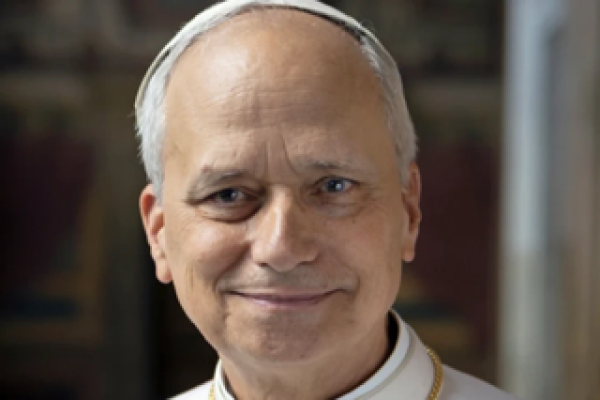
Pope Leo XIV recently issued an encyclical (Magnifica Humanitas, “Magnificent Humanity: On Safeguarding the Human Person in the Time of Artificial Intelligence”) about the importance and dignity of work, especially in an age when it is feared that artificial intelligence may swallow jobs, spit out workers and create vast unemployment, slicing a huge swath of misery and tumult through society and the economy.
Our eminent South Side pope wrote that work “expresses and enhances the dignity of our lives. It is a requirement of the human condition, a normal path toward maturity, development and personal fulfillment.” With respect to AI replacing people and jobs, he called for “the protection of employment opportunities, and the irreplaceable role of the individual must remain the general rule.”
It’s hard to argue with that, but at the risk of embellishing and perhaps enhancing what His Eminence had in mind, I’d like to expand on the notion of work. Work is whatever brings us joy and dignity, in a way that advances society.
That can include flipping hamburgers and making lattes — both of which can be done with finesse, panache and joy — as well as volunteer work that is critical to the mission of not-for-profits and even hobbies like music making, woodworking or bird watching, from which hobbyists can derive enormous pleasure and a greater sense of self-worth.
Happy to volunteer
I put myself in that category: I’m no longer officially “employed,” having retired from corporate life 16 years ago. But I happily volunteer at the RoundTable six days a week helping edit the newsletter and writing the occasional column, like this one. It’s something I do for free because I love working with my colleagues and helping produce great community journalism.
Work and family are, in my view, the two most important facets of life. I’ve been lucky in both: married to the same wonderful woman for 53 years and blessed with two great children and a beloved grandchild; and lucky in work.
My first real job, starting in 1973, was at Lerner Newspapers, a chain of Chicago and suburban community weeklies whose main office was at Howard Street at Ashland Avenue, half a mile or so south of Evanston.
The managing editor at the time was Art Rotstein. Art was a caricature of every crusty old-time journalist you’ve ever seen in a movie or TV show; think Perry White in the old Superman series (“Don’t call me chief!”).
“Whaddya doing?” Art barked at me in the newsroom one afternoon soon after I started. I said I was trying to write a story — longhand.
“Well, don’t,” he admonished. “Stick the paper in the typewriter and type your story there.” I gulped — and learned how to do it.
Soon Art left for the Associated Press, and my next boss was Larry Persily, who was one of the best supervisors a person could have.
Rare humility
For one thing, Larry had genuine humility, a rare quality in a person. When he explained something I didn’t get, he assumed the problem was in the way he explained it, not in the sorry state of my comprehension. Larry made it a point to know every aspect of how things worked at Lerner — not just the newsroom operation, but the workings of the typographers in the basement and the sales force and executives on the first floor. Knowing the whole scheme of things was an enormous advantage in getting the paper out. And Larry appreciated my work and let me know it — a real confidence-booster for a struggling cub reporter.
After six years at Lerner, I went to work at the Sun-Times as a copy editor, and after three years there and with a master’s degree in business from Loyola in hand, I took a 28-year detour from newspapers to work on the “dark side,” as journalists call corporate work. I had no qualms; what I had was a family and a mortgage.
I respected my bosses and colleagues in the business world and enjoyed writing and publishing annual reports and helping select speakers for our officer meetings, even getting to hire and work with such great historians as Doris Kearns Goodwin and David McCullough.
But I missed community journalism, so 15 years ago I presented myself to RoundTable founder and publisher Mary Gavin at the old office at 1124 Florence Ave. and offered to write a business column.
From arts column to columnist
“We have a business reporter, Vicky Scott,” Mary responded amiably.
Not to be deterred, I countered with, “Well, how about an arts columnist?” I played in the Evanston Symphony Orchestra and thought I knew a thing or two about local arts organizations.
Mary took me up on the offer, and for about a year I would drop by the office, collect all the press releases from arts organizations that had arrived during the previous two weeks, and fashion a column from them.
After that I offered to be a copy editor and started dropping by the office several days a week to edit stories. I loved it. Again I was lucky in my bosses: Mary and her husband and co-founder Larry Gavin were (and are) outstanding people — deeply committed to community journalism, deeply humble (see above) and terrific journalists. I consider them mentors and good friends to this day.
During the last 15 years, I’ve also written movie and book reviews, news and feature stories, and since 2017 a column that up until last fall ran every other week. Now it’s more like once a month.
I’m honored to do this work — I do it without pay because the RoundTable is such a huge asset to the city. And the fact that it’s free — by design, Mary and Larry always insisted on that — is a great plus. The RoundTable is just that: a big, welcoming place, a virtual round table where readers are invited to pull up an imaginary chair and join in to consider the critically important issues of the day and enjoy incisive writing and great photography focused on our beloved city.
And once again I’m privileged to work for a great boss. Tracy Quattrocki, the RoundTable’s executive editor, is a superb leader — knowledgeable, smart and fun to work with — on both the editorial and business sides.
How the newsletter works
I’m also privileged to work with a great morning crew to get the newsletter out: Tracy, Kathleen, Bob and Ian. Altogether there’s more than a century of experience in Chicagoland print and online journalism among us.
The way your daily newsletter comes into being is this: The night before, one of our reporters prepares a first draft based on the latest news and feature stories. Ian will go over it first thing in the morning, doing some rewriting and re-ordering as he sees fit, then alerts me when he’s done, at which point I give it a look-see. I check to make sure the links work, copy conforms to our style, and that everything is logical, concise and accurate. Ian has already done most of that, so there’s usually not much for me to do. Then either Ian or I will send out a test for the five of us to review.
That’s when the fun begins, a torrent of back-and-forth texts debating this or that point, discussing whether a certain newsletter item should move up or down, whether this or that word is just right, checking for mistakes and pointing out dreaded spelling errors — which will usually elicit the journalist’s mandatory (and highest) compliment, “Nice catch!”
All in less than half an hour: Time is of the essence! When everyone has signed off, I press the “send” button and out it goes to almost 16,000 recipients.
It’s fun and important work.
Beyond drudgery
Not every job is both those things. Some jobs are tedious in the extreme. Think of the street and highway construction flaggers who spend every workday flipping a sign back and forth that says “STOP” and “SLOW.” But guess what? Their work is invaluable in preventing accidents and keeping traffic flowing.
Some jobs that we might assume to be wearisome and depressing are not. A new book by the Montreal memoirist Simon Paré-Poupart, called Trash: A Garbageman’s Story, recalls his two decades hauling trash. He loved it.
“The looks I get along my route show me that people sometimes mistake me for the trash I handle,” he writes in the introduction. “But the way I see it, my job is of great consequence. I’m a garbageman. Day after day, I heave and haul the detritus of the most polluting civilization in human history. My fellow garbagemen and I scrub clean the stains of our consumer society. Our work behind the scenes keeps the whole edifice from crumbling down, at least for now.”
A 2019 article in Psychology Today spells out some of the many benefits of work: it provides friendship, a sense of stability, an intellectual challenge, a positive identity and self-worth, a vehicle to contribute to the greater good and a way to better understanding the world, other people and oneself — plus pay, of course.
These are not just abstract points. A recent Wall Street Journal article reported that “The share of the working-age population that is either working or looking for work — known as the labor-force participation rate — edged down to 61.9% in March, its lowest level since 1977, outside of the pandemic.”
Thankfully, that trend may finally be reversing itself. “The country added a seasonally adjusted 172,000 jobs in May, the Labor Department said Friday, posting strong payroll gains for the third month in a row and beating expectations,” the Journal reported June 6.
That’s good news economically — and good news personally. Work is an invaluable contributor to society as a whole as well as to individuals. Work is dignified and necessary. There’s a goodness to it that transcends drudgery. As the great physicist Stephen Hawking put it, “Work gives you meaning and purpose and life is empty without it.”